The Short Answer
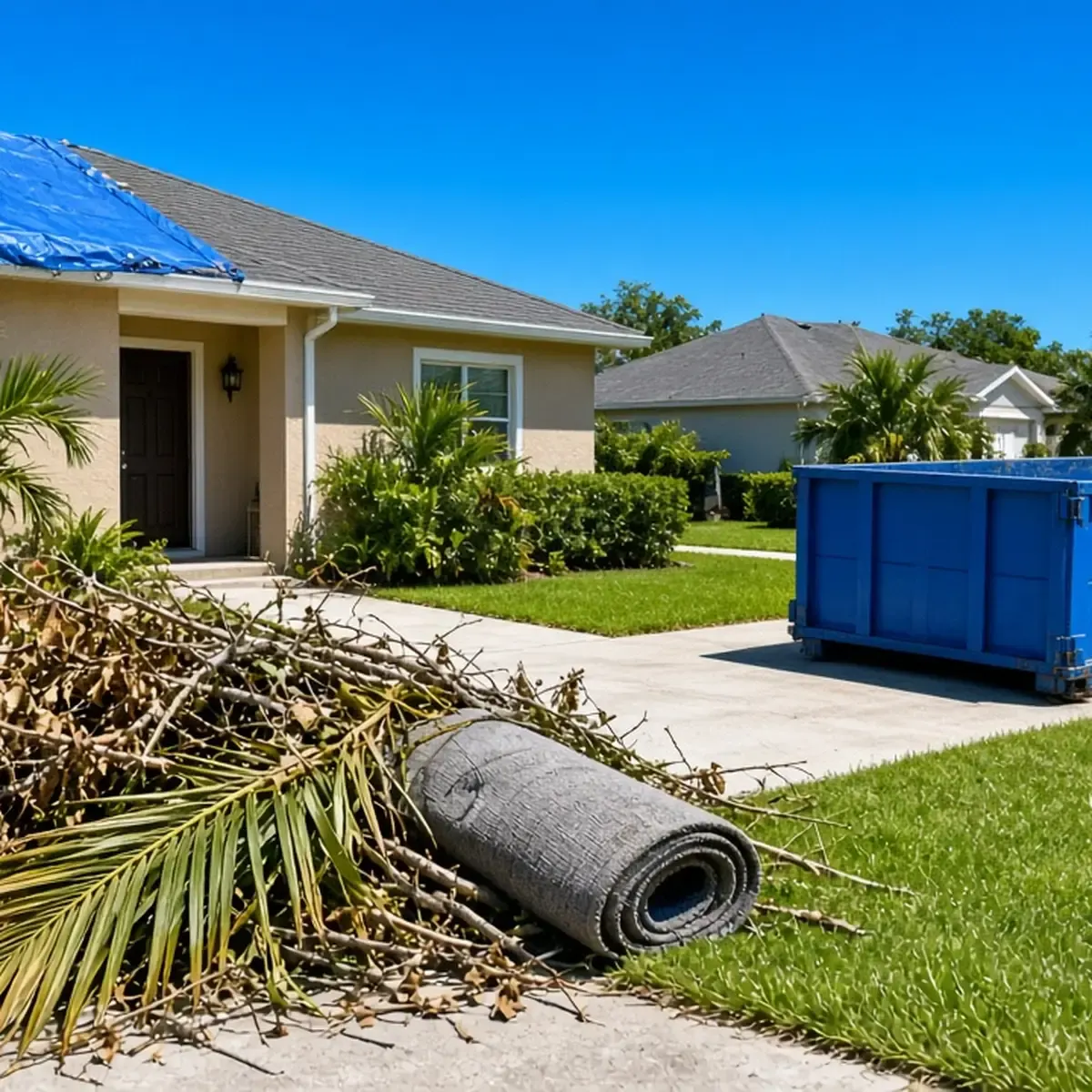
Sort by type and size by weight. Keep limbs and brush apart from building materials, tarp the load before rain and rent for the heaviest material. A 20-yard takes most single-lot cleanups, and a 30 or 40-yard takes a large lot or a damaged building.
What the Report Says About Charlotte County
The National Hurricane Center's tropical cyclone report on Ian records that the eye reached Cayo Costa and then made a second landfall near Punta Gorda about 90 minutes later at an estimated 125 knots. It says an airport weather station in Punta Gorda gusted to 117 knots before it stopped reporting. The report also says the Peace and Myakka Rivers reached record levels. Port Charlotte is a census-designated place in the same county, and the Census Bureau's American Community Survey (2020-2024, table S2504) counts 27,888 occupied homes there, about 88% of them single-family detached.
Sort Storm Debris Before You Load
Sorting saves weight and money. The categories load differently.
| Debris | Where it goes | Why |
|---|---|---|
| Limbs, palm fronds, brush | Yard waste dumpster | Bulky, light until wet |
| Fencing, lumber, siding | Construction dumpster | Mixed building debris |
| Roofing and shingles | Construction dumpster, size by weight | Heavy, tighter caps |
| Wet drywall, insulation, carpet | Construction or cleanout dumpster | Heavy when soaked |
| Paint, batteries, bulbs, chemicals | Not in the dumpster | Refused by the county landfill |
| Appliances and furniture | Cleanout dumpster | Bulky |
The two main loads are covered on our yard waste dumpster and construction dumpster rental pages.
Which Dumpster Fits Storm Cleanup
The lot and the damage decide it. One lot with downed limbs and a damaged fence fits a 20-yard, a size CustomTruck rates for large remodels and about 3,000 square feet of shingles. A big lot or a damaged building calls for a 30 or 40-yard, and CustomTruck rates the 40-yard for large water or fire remediation. Dropcurb's included weight is 2 to 3 tons for a 20-yard and 4 to 6 tons for a 40-yard.
Storm Debris and Weight
Water makes debris heavier than it looks. Wood, drywall and insulation soak it up, and the NOAA 1991-2020 normals for the Port Charlotte 6.2 W station record 58.16 inches of precipitation in a normal year. The landfill charges $49.88 per ton for county waste, and Dropcurb lists overage at about $50 to $150 per extra ton nationally. A tarp over the load keeps rain from adding weight. If the repair has a building permit, give us the number, because the landfill bills construction debris without one at $99.74 per ton.
Frequently Asked Questions
What size dumpster do I need for hurricane debris?
A 20-yard fits most single-lot cleanups with limbs, a fence and some roofing. A big lot or a damaged building takes a 30 or 40-yard. Wet material is heavy, and Dropcurb lists 2 to 3 tons included for a 20-yard. Tell us the amount and type, and we recommend a size.
Can I get a dumpster the same day after a storm?
Call 123-456-7890 and ask. We say on the call whether today is open, and storm weeks can be busy. Have the address, the spot and the debris ready. See our same-day dumpster rental page.
Can I mix limbs and building materials?
Often, but tell us what is in the load. Dropcurb says shingles and concrete can be priced differently from light debris, and heavy materials fill the allowance first. Sorting limbs from roofing lets us size each box to its weight.
Will the county mini-transfer site take storm debris?
The county's brochure describes limits on construction and demolition debris, and it does not accept reroofing material or land-clearing debris from vacant lots. In October 2024 the county announced extended operating hours at the Mid-County site for storm debris, but that was a storm-period notice. Call the county before hauling anything there.
What should stay out of a storm debris dumpster?
Paint, batteries, fluorescent bulbs, mercury devices, fuel and chemicals. The county landfill does not accept used motor oil, lead-acid batteries, mercury devices, fluorescent bulbs or hazardous and bio-medical waste. Our prohibited items guide shows where each goes.